
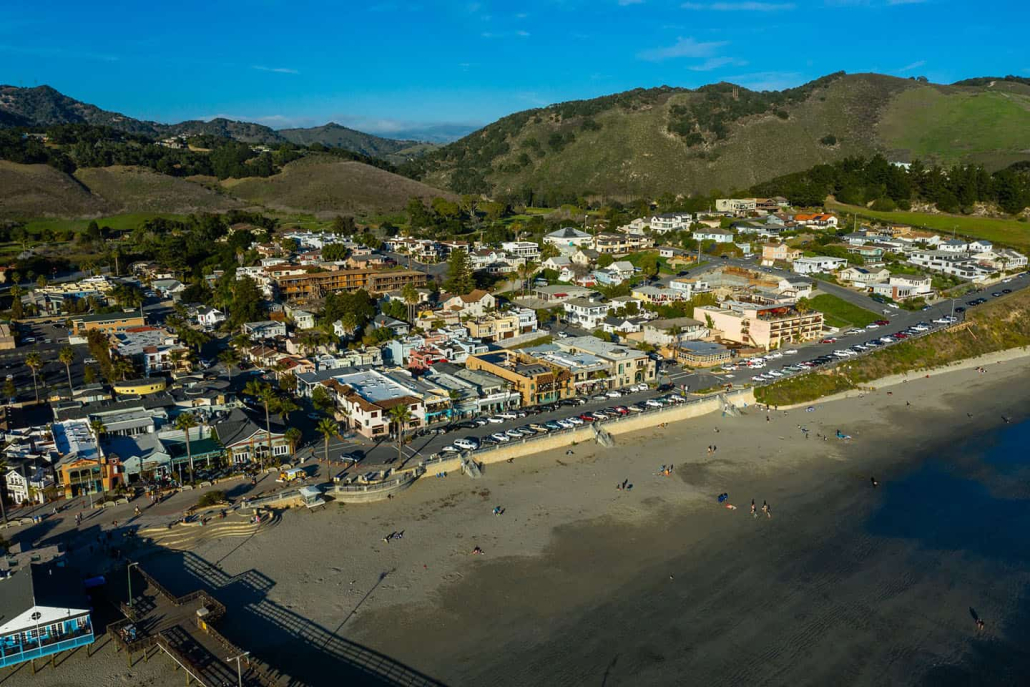
AVILA BEACH California’s Coast at a Softer Volume Avila Beach sits inside the sheltered curve of San Luis Bay. “The rarest luxury on the California coast: an unhurried day.
Avila Beach keeps its own quiet rhythm The road into Avila Beach does not make a grand entrance. It leaves U.S. 101, follows a green valley toward the Pacific and seems to lower its voice as it goes. Oaks gather along San Luis Obispo Creek. The air turns cooler, then salty. Only at the final bend does the bay appear—blue water held between
headlands, a beach facing a small grid of streets, and a pier drawing a clean line toward the horizon.
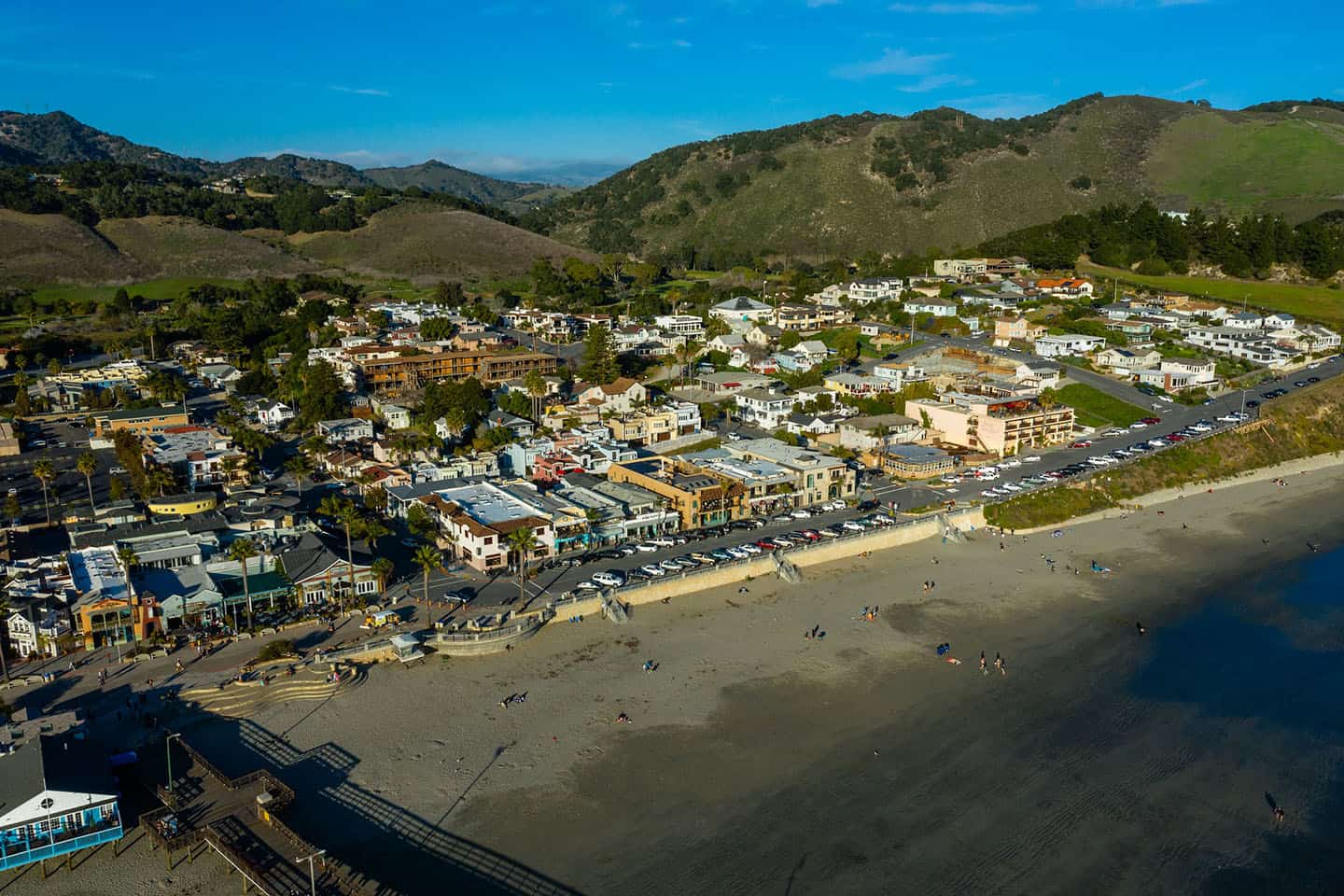
That modest reveal is the right introduction. Avila Beach is not a place of sweeping boulevards or an itinerary that
demands military precision. It is compact enough to cross on foot and relaxed enough to make lingering feel like
the main event. California’s official visitor guide credits the town with a warm, sunny microclimate; the protected
curve of San Luis Bay adds to the sense that Avila exists in a pocket of its own.
The Bob Jones Trail follows San Luis Obispo Creek toward the sea. The best arrival follows the creek The most graceful way into town is not behind a windshield. The Bob Jones Trail—also called the City to the SeaTrail—runs beside San Luis Obispo Creek, through a shaded corridor of sycamores and oaks, before reaching downtown.
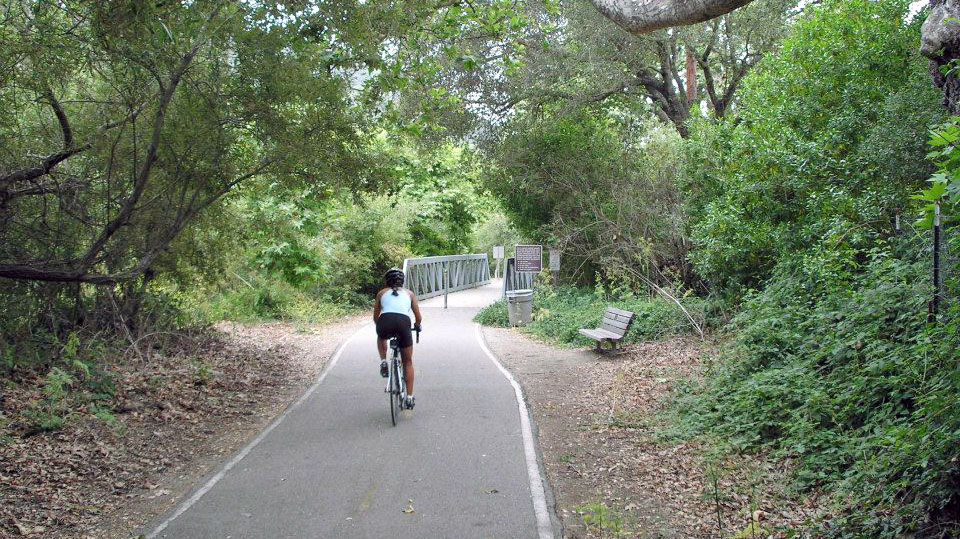
From the Ontario Road trailhead to the end of Avila Pier, the route is three miles, according to the local visitor bureau. It is paved, mostly flat and shared by walkers, runners and cyclists. The trail shifts the mood before the ocean is even visible. Bicycle tires whisper over pavement. Creek water appears through the leaves. Fields and hillside greenery soften the transition from inland California to the coast. Then the trees thin, the air brightens and the path releases you near the beach.
In a state built around dramatic arrivals, this one is unusually gentle. The journey does not compete with the
destination; it prepares you for it. The shoreline feels like the town’s front porch .The beachfront promenade keeps dining, shops and the sand within a few easy blocks. At the water, Avila’s scale becomes its defining pleasure. The beachfront promenade gathers restaurants, tasting rooms and small shops close to the sand. Nothing is very far from anything else. A morning can begin with coffee, drift onto the pier, pause for a long look at the bay and return to the same few blocks for lunch.
The beach itself encourages uncomplicated rituals. Children work at the edge of the water. Dogs and their people
appear during the permitted early and late hours. Pelicans patrol overhead. From the pier, the view turns back
toward low buildings pressed against the hills—a town small enough to take in at once. There are more activities if a visitor wants them. The Central Coast Aquarium offers hands-on encounters with local marine life. Downtown tasting rooms draw the nearby wine country to the shoreline. Natural mineral springs sit back in the valley. Yet Avila is best understood not as a checklist, but as a setting. Its real attraction is the freedom to stop moving.
A working harbor keeps the bay honest . Follow Avila Beach Drive west and the resort-like polish gives way to Port San Luis. Harford Pier reaches into deeper water past moored boats, working equipment and the practical buildings of a harbor. Sea lions sometimes supply the soundtrack. Anglers watch their lines. The scene is less composed than the promenade and more revealing.
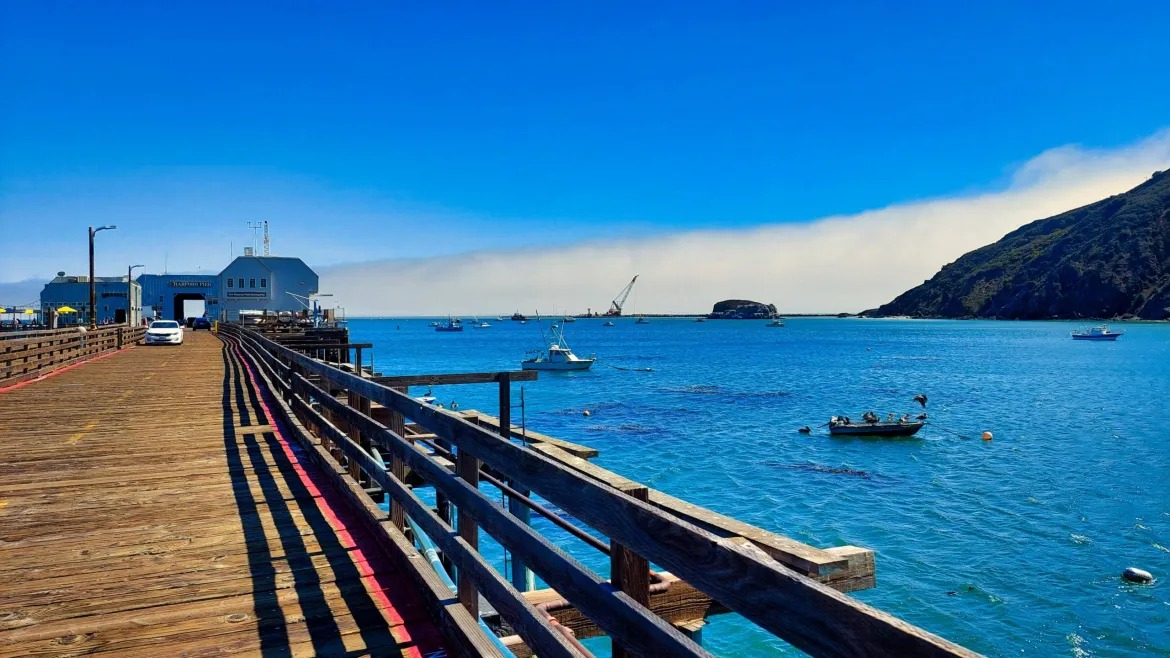
Harford Pier brings visitors into the working life of Port San Luis. This is where Avila’s maritime character comes into focus. Long before beach weekends and wine flights, the bay was a point of exchange between land and sea. In the late nineteenth century, Port Harford connected San Luis Obispo County’s farms and communities to coastal shipping. Rail lines once carried freight and passengers to the wharf. The modern harbor still reminds visitors that this protected water is not merely scenery; it is a workplace. That distinction matters. Avila’s quiet is not emptiness. It is the layered sound of rigging, gulls, conversation, surf and the low engine of a boat heading out.
The Chumash are the Indigenous people of this coast, and Avila’s later history reflects the successive eras that
reshaped California. The town took its name from Miguel Ávila, who received the Rancho San Miguelito land grant
in 1842. By the late 1800s, the settlement had become San Luis Obispo County’s principal shipping port.
Oil later transformed the waterfront—and nearly undid it. Pipelines carried petroleum products beneath the town for much of the twentieth century.
A 1998 report by California’s Legislative Analyst’s Office estimated that roughly 400,000 gallons had leaked into an underground plume beneath central Avila Beach and the adjacent shore. Contaminated soil was discovered in 1989; investigation and years of cleanup followed. Parts of Front Street and the business district were excavated and rebuilt.
The tidy promenade seen today is therefore not simply quaint. It is evidence of rupture, removal and reinvention.
Avila’s ease was hard won. Remembering that history adds depth to the pastel facades and broad walkways: this
is a town that had to remake its own front porch. The lighthouse gives the coast a long view At the outer edge of the bay, Point San Luis Lighthouse stands above the water in white siding and red trim. First illuminated in 1890, it belongs to the period when the harbor’s traffic made safer navigation urgent. Its design is distinctive—a Prairie Victorian keeper’s residence with the light tower attached—and the site is listed on the National Register of Historic
The lighthouse is not a casual roadside stop; public visits are organized through guided tours. That controlled approach suits the place. Reaching it feels less like dropping by an attraction than entering a preserved chapter of the coast. From the headland, the bay opens wide, and Avila Beach appears in the distance as a slim meeting of sand, streets and hills. The perspective explains the town’s enduring character. The headlands shelter it. The valley
conceals it until the final approach. The harbor gives it purpose. Geography has not kept change away, but it
has given Avila a sense of enclosure rare on the California coast.
Quiet is the destination. Avila Beach can be visited in a day, but it should not be hurried through one. Arrive along the creek if you can. Walk the promenade without treating it as a route to somewhere else. Stand on the pier long enough to notice the water change color. Continue to Port San Luis and watch the working bay. Leave room for a mineral soak, a glass of local wine or nothing more ambitious than another walk at sunset.
The town’s quiet is not perfect. Summer weekends bring traffic, and any beloved beach community carries the
pressure of its own popularity. But come early, stay late or visit outside the busiest hours, and Avila still offers the
thing its setting promises: a softer version of the California coast. Here, the memorable moment may be the one that barely announces itself—the click of a bicycle freewheel beneath the trees, a fishing line cutting into blue water, or the sun slipping behind the headland while the town settles in for the evening.
