
The Little House Behind the Big House: Louisiana’s Garçonnières
Behind many grand Louisiana houses stood a small separate building where the sons slept.
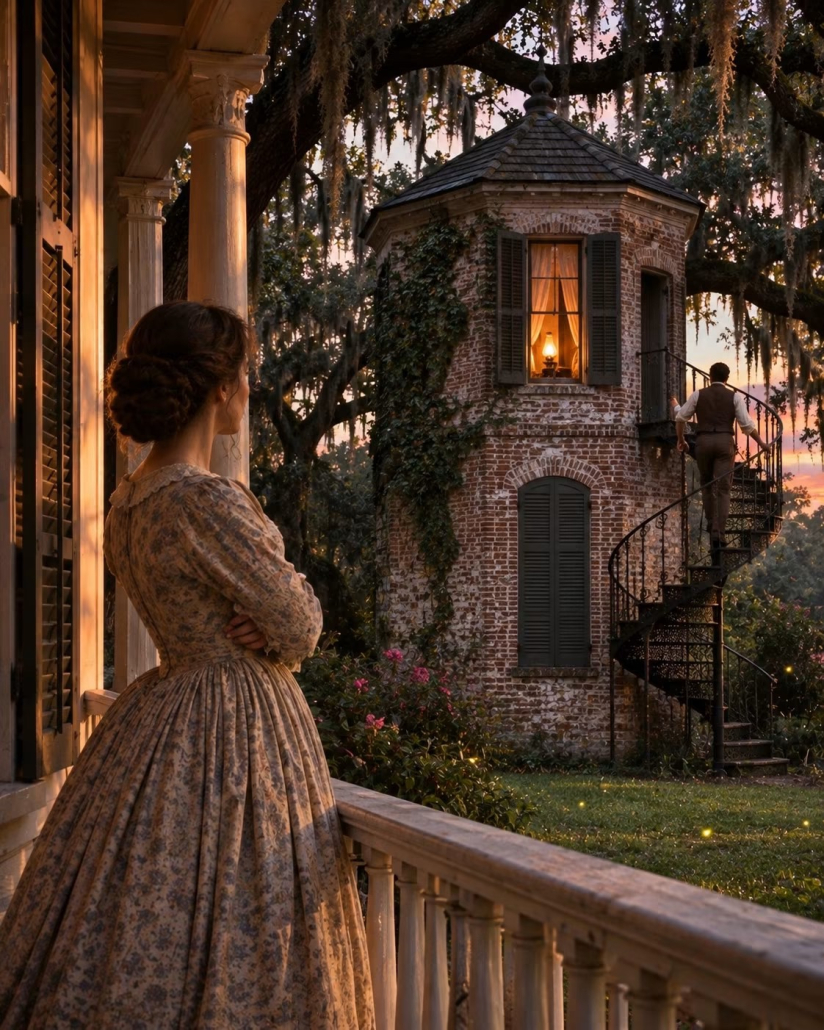
It was called a garçonnière, the French word for a bachelor’s quarters, and if you have toured the old plantation homes along the Mississippi, the Bayou Teche or River Road, you may have walked right past one without realizing what it was. We have — more than once. Walking the grounds of the great River Road houses, and the gardens at Houmas House in Darrow, where our friend Kevin Kelly has restored every corner of the estate to its antebellum glory, we kept noticing these modest little buildings tucked behind the big house and wondering about them. Some stood two stories tall, built of brick or cypress, often with an outside staircase and a little gallery of their own.
Houmas House is where these little buildings first caught our eye. We wrote about the estate back in 2021 and we have been returning ever since — Kevin Kelly is a friend, and every visit of ours seems to start the same way: a slow wander through the gardens, a long meal, a glass of wine from that cellar he tucked into the old water cisterns. Kevin told us he wants people to “come here to have a meal, to have a drink, to enjoy it,” and we have happily taken him at his word. It was on one of those walks behind the big house, the oaks dripping Spanish moss overhead, that we first stopped in front of a little two-story brick building with its own outside stairs and asked what it was. We have not walked past one since without stopping.
The idea was simple, and very French Creole. When a son of the family grew old enough to be considered a young man, he moved out of the main house into his own quarters. There he could come and go, receive friends, study, keep horses and dogs and, in the eyes of his elders, learn to manage himself. The main house stayed quiet for the women, the younger children and visiting relatives.
In practice, the garçonnière was a social center. Young men entertained friends, hosted card games and kept late hours, while mothers kept an eye on the lamplight in the windows from across the yard. Some had a separate entrance so a son could come home after midnight without waking the house — a detail that tells you everything about how well these families understood their sons.
A few were octagonal, a shape that was fashionable in the early 1800s, while others were plain square rooms set above a storeroom. Many still stand beside the big houses that have become museums and wedding venues, and once you know what you are looking at, you start seeing them everywhere along the river.
There is something touching about them. A garçonnière tells you how much a family valued the line between childhood and adulthood — close enough to keep an eye on a young man, separate enough to let him become one. It also tells you that houses in old Louisiana were designed around who lived in them, and when, in a way our open floor plans have long forgotten.
Louisiana rewards the traveler who looks twice. We go for the food and the wine, but it is these small, human details that stay with us after the drive home: a pigeonnier here, a garçonnière there, each one a sentence in the family’s story. The big houses get the postcards. The little houses explain them.
The next time you pass a plantation house with a little building tucked behind it, look for the outside stairs. You might be looking at a young man’s first place of his own.
